
Search and Seizure Issues in Drug Crime Investigations
Oct. 29, 2026
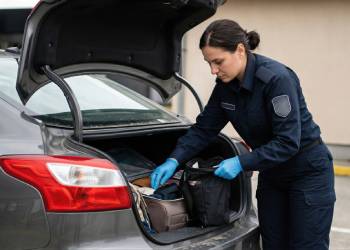 If police found drugs in your car, your pocket, or your apartment, how they found them may matter as much as what they found. In New York, courts can suppress evidence obtained through an unlawful search, meaning the prosecution cannot use it against you at trial, and without that evidence, many drug cases weaken or fall apart.
Suppression is not automatic, though. You generally must request it through a written motion, subject to filing deadlines and exceptions. A judge then examines whether the police acted lawfully.
At James Hopkins Law Firm, I can review arrest reports, body-camera footage, and warrant paperwork in drug cases across Syracuse and Central New York to identify potential violations of your constitutional rights. If you were charged after a search, I can evaluate whether there are grounds to challenge the evidence before the applicable filing deadline.
What Makes a Search Unlawful in New York?
A search is generally unlawful when police acted without a warrant and no recognized exception applied, or when they relied on a warrant that lacked legal justification or exceeded its authorized scope. Both the Fourth Amendment and Article I, Section 12 of the New York Constitution prohibit unreasonable searches and seizures, and New York courts have often interpreted the state provision more protectively than federal courts read the Fourth Amendment.
For example, New York has declined to adopt the federal "good faith" exception, so an officer's reasonable belief that a defective warrant was valid does not, by itself, prevent suppression.
Common exceptions to the warrant requirement include voluntary consent, search incident to a lawful arrest, plain view, and the automobile exception, which permits a vehicle search when officers have probable cause to believe it contains contraband or evidence of a crime. Each exception has limits. For instance, consenting to a search of your car does not necessarily authorize officers to search every item inside it.
In practice, many suppression arguments in drug cases turn on one question: could the officers point to specific facts that justified their actions, or were they acting on a hunch?
The Four Levels of Police Encounters in New York
New York courts evaluate police encounters using a four-level framework established by the Court of Appeals in People v. De Bour. Each level requires stronger justification for police involvement.
At the first level, an officer may ask basic, nonaccusatory questions if there is an objective, credible reason to approach. Pointed questions suggesting you are a suspect require a founded suspicion of criminal activity. Forcibly stopping and detaining you requires reasonable suspicion that you committed, are committing, or are about to commit a crime. A protective frisk requires additional reasonable suspicion that the officer faces a danger of physical injury. An arrest requires probable cause.
The framework matters because encounters can escalate quickly. If an officer went from a casual question to ordering you to empty your pockets without the facts needed for that jump, drugs found as a result may be suppressed. The challenge can reach beyond the drugs themselves: New York law also allows suppression of statements and other evidence obtained as a result of unlawful police conduct, subject to applicable exceptions.
Challenging a Search Warrant for Your Home or Phone
A search warrant is not automatically valid just because a judge signed it. Police must provide enough evidence to establish probable cause, or a reasonable basis to believe a crime occurred. The warrant must also clearly identify where officers can search and what they can seize.
If police rely on information from a confidential informant, courts generally examine how that person obtained the information and whether it is reliable. An anonymous tip without enough supporting evidence may not justify a search warrant. Police generally need a warrant to enter your home unless you consent or an exception applies, such as an emergency requiring immediate action.
Similar protections apply to your phone. Police generally need a warrant to search data on a phone seized during an arrest. If officers unlawfully access your text messages, call logs, or other information, you may have grounds to request that the evidence be excluded from your drug case.
How a Motion to Suppress Works
If you believe police obtained evidence through an unlawful search, your attorney can file a written request asking the court to exclude it from your case. In New York, this request generally must be filed within 45 days after your arraignment, which is when you formally appear in court to hear the charges against you. Certain circumstances may extend this deadline, including delays in receiving evidence from prosecutors. Missing the deadline without a legally accepted reason could prevent you from challenging the search.
If your request raises factual issues that require a hearing, the judge will examine how police obtained the evidence. Officers may testify under oath and answer questions about their actions. Generally, you can challenge a search only if it violated your own privacy rights. However, New York recognizes an exception in certain drug cases involving vehicles, even if you do not own the car.
If the judge suppresses key evidence, prosecutors may reduce or dismiss charges. If the judge denies the motion, sworn testimony can still expose inconsistencies that shape plea negotiations or trial. An attorney handling drug crime defense cases can use these findings to challenge the prosecution's evidence and develop a defense based on the circumstances of your arrest.
Comprehensive Legal Representation in New York
I have defended people accused of crimes for more than 40 years, and my experience as a collegiate wrestler taught me the value of preparation and quick thinking in the courtroom. In a search-and-seizure challenge, I review police reports alongside body-camera footage, examine warrant applications for potential legal issues, and cross-examine officers at suppression hearings when appropriate. I explain what the evidence shows and discuss your legal options so you can make informed decisions about your defense.
From my Syracuse office at 217 Montgomery Street, I represent clients throughout Central and Northern New York, including Cicero, Baldwinsville, Rome, Utica, Rochester, Oswego, Watertown, and beyond.
If you need a Syracuse drug crime defense lawyer, call (315) 475-4555 or request a consultation online. Bring any paperwork police left with you, such as a copy of the warrant or a property receipt, so I can begin evaluating the search and identify any applicable motion deadlines.