
When Reckless Driving Can Lead to Vehicular Assault Charges
Oct. 29, 2026
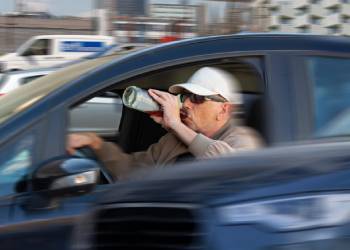 You may have received a reckless driving ticket after a crash, only to learn days later that prosecutors are considering felony charges because the other driver suffered serious injuries. In New York, however, reckless driving alone does not constitute vehicular assault. Vehicular assault generally requires proof that you were driving while intoxicated or impaired by drugs and that your impairment caused another person's serious physical injury.
Reckless driving can still affect the charges you face. When combined with impaired driving and other required circumstances, it can contribute to an aggravated vehicular assault charge. Even if you were sober, a reckless crash that causes injuries could lead to other criminal charges. Understanding the specific allegations against you is important because each charge carries different penalties and requires a different defense approach.
At James Hopkins Law Firm, I represent people in Syracuse and throughout Central and Northern New York who face vehicular assault, DWI, and related criminal charges after serious accidents. I can review the charges, police reports, and available chemical test results to identify potential defenses and help you understand your legal options. Call us now to schedule a consultation.
What Makes a Charge Vehicular Assault
Under New York's second-degree vehicular assault law, prosecutors must prove that your alcohol or drug impairment caused you to drive in a way that seriously injured another person. Second-degree vehicular assault is a class E felony.
“Serious physical injury” has a specific legal meaning. A trip to the emergency room does not automatically qualify. The injury must create a substantial risk of death or cause serious and lasting disfigurement, prolonged health problems, or prolonged loss or impairment of an organ's function. Whether fractures, cuts, or soft-tissue injuries meet this standard can become a point of dispute. Your medical records and the crash report can play important roles in determining whether the charge is justified.
The law also includes a rebuttable presumption. If prosecutors prove that you were intoxicated or impaired when the injury occurred, the law presumes that your impairment caused the way you drove. However, you can challenge this presumption with evidence, such as proof that another driver ran a red light or that the crash would have occurred regardless of your impairment.
First-degree vehicular assault is a class D felony that involves additional aggravating circumstances. These include a blood alcohol concentration of 0.18% or higher, a qualifying DWI conviction within the previous ten years, driving with a license suspended or revoked for a DWI-related reason, seriously injuring more than one person, or seriously injuring a passenger aged 15 or younger under the circumstances specified by law.
How Reckless Driving Creates Aggravated Vehicular Assault
Reckless driving is the element that separates first-degree vehicular assault from aggravated vehicular assault. Under New York’s aggravated vehicular assault law, prosecutors must prove that you drove recklessly as defined by the Vehicle and Traffic Law, committed second-degree vehicular assault, and met at least one of the aggravating factors discussed above. Aggravated vehicular assault is a class C felony.
This distinction can significantly affect the charges you face. For example, two drivers with a blood alcohol concentration (BAC) of 0.18% may cause similar injuries but face different charges. One may face a class D felony, while the other may face a class C felony if prosecutors can also prove reckless driving. This makes evidence of how you drove just as important to examine as your breath or blood test results.
Understanding What Makes Driving Reckless
New York defines reckless driving as operating a vehicle in a way that unreasonably interferes with the proper use of a road or parking lot, or unreasonably endangers the people using it. On its own, it is a misdemeanor. New York courts have held that when prosecutors charge reckless driving, or when it is an element of a larger crime, they must prove conduct more serious than a simple traffic infraction. A single speeding violation or one moment of inattention does not automatically qualify.
Reckless driving is also distinct from “recklessness” as defined in the Penal Law. Penal Law recklessness means being aware of a substantial and unjustifiable risk and consciously disregarding it. Each term has its own proof requirements, and a charge can fail when the evidence supports one but not the other.
Possible Penalties
When alcohol and drugs played no part, vehicular assault does not apply, but other assault laws can. Recklessly causing physical injury can support assault in the third degree. Recklessly causing serious physical injury with a “dangerous instrument” can support assault in the second degree, and New York’s definition of a dangerous instrument expressly includes vehicles. Reckless endangerment can be charged even if no one was hurt, if the driving created a substantial risk of serious physical injury.
Because the same crash can be charged in several ways, an effective vehicular assault defense often starts by questioning which statute actually fits the facts. That analysis covers the driver’s state of mind, the cause of the collision, and the severity of the injuries.
The maximum prison terms vary widely depending on the charge:
Assault in the third degree is a class A misdemeanor punishable by up to 364 days in jail.
Vehicular assault in the second degree is a class E felony punishable by up to 4 years in prison.
Vehicular assault in the first degree is a class D felony punishable by up to 7 years in prison.
Assault in the second degree is a class D felony punishable by up to 7 years in prison.
Aggravated vehicular assault is a class C felony punishable by up to 15 years in prison.
These are statutory maximums. Actual sentences depend on criminal history, the facts of the case, and how the case is resolved. Some convictions also carry license and insurance consequences.
Aggressive & Dependable Criminal Defense Services in New York
I have more than 40 years of experience representing people accused of crimes, charged with DWI, or injured in accidents. As your Syracuse criminal defense attorney, I will review the evidence, explain your options and the potential consequences, and work with you to develop a vehicular assault defense strategy based on your circumstances and goals.
I represent clients in Syracuse, Cicero, Baldwinsville, Rome, Utica, Rochester, Oswego, Watertown, and beyond. If a reckless driving ticket has turned into an injury investigation, or you have been charged with vehicular assault, contact me at (315) 475-4555 to review the charge and evidence before your next court date.